power99
Which would you rather have in hand?
Pick a card to cast your vote. Use ← / →.
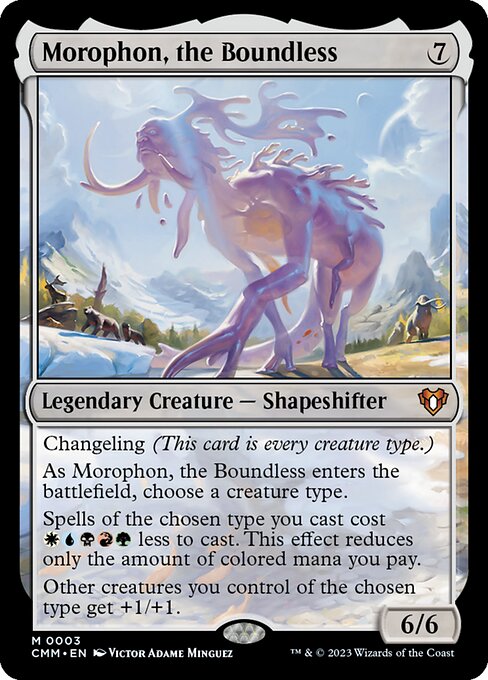
Morophon, the Boundless
Changeling (This card is every creature type.) As Morophon enters, choose a creature type. Spells of the chosen type you cast cost less to cast. This effect reduces only the amount of colored mana you pay. Other creatures you control of the chosen type get +1/+1.
VS
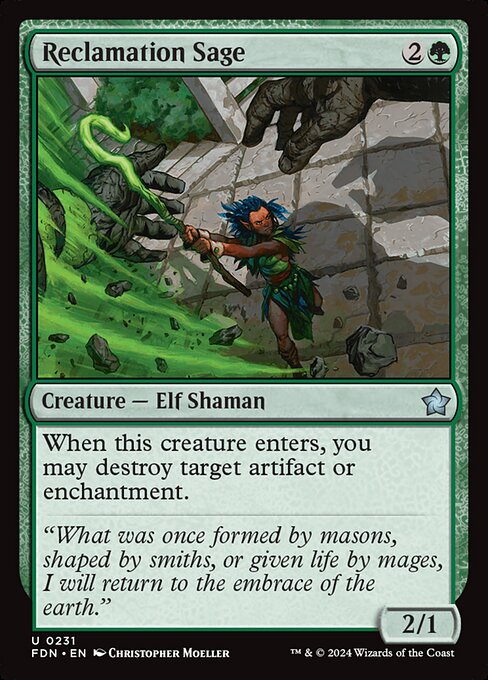
Reclamation Sage
When this creature enters, you may destroy target artifact or enchantment.
Sign up to save your streak and appear on the voter leaderboard.
FAQ
How Power99 fits alongside brackets, how ratings work, and how to think about edge cases when you vote.
Why not just use the bracket system?
The bracket system is great for helping a random playgroup at an LGS align on expectations (and no system is perfect). But most of us have has that experience: “this deck is technically Bracket 2” even though it doesn't feel like Bracket 2, or you built a Bracket 3 deck with three game changers and still get stomped by other Bracket 3 tables.
Power99 is trying to help explain why that happens. Maybe your friends don't want to play against your deck because it's too salty. Maybe it's high synergy. Maybe you're running weak cards or very powerful ones in ways brackets don't capture. Our goal is to give players more tools to communicate expectations with their pods.
How does the Bradley–Terry system work?
When you vote, you answer a simple question: which card would you rather have in hand? Every pick feeds a Bradley–Terry model; a statistical method designed for pairwise comparisons and the same family of ideas behind Elo ratings.
The model estimates a strength score for each card based on who beat whom across the community. Cards that consistently win against tough opponents rise; cards that lose to weaker options fall. Those scores are shown on an Elo-like scale (around 1,500 is typical), with an uncertainty band that shrinks as more people vote on a card.
A periodic fit job recalculates rankings from all votes, so scores stay stable even as new cards enter the pool and the meta shifts.
This card is only powerful in a specific scenario—how should I rate it?
Rate cards the way they perform in your experience and the way other players will react when they see them. Thassa's Oracle played “fairly” is a very different card from Thassa's Oracle as a combo piece but in practice, it's mostly a combo piece. When your table sees it, they'll treat you like you're on combo even if that's not your plan.
Because Power99 is about helping communicate how your deck is viewed, rate cards with that social reality in mind: how they actually show up at the table, not the scenario where they never do what everyone expects.